
Sprache | Language | בחירת שפה
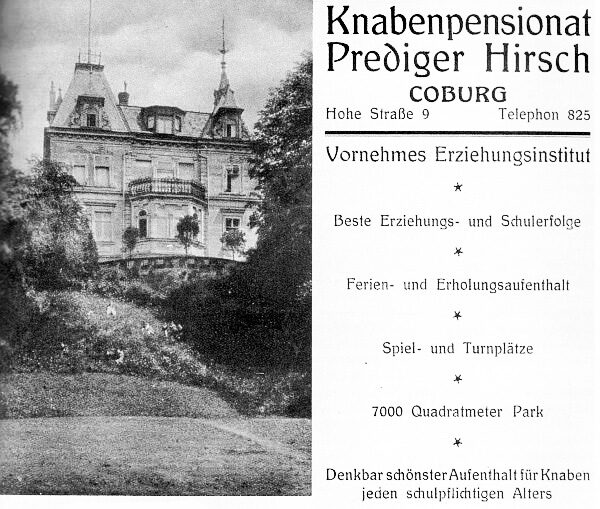
Compulsory schooling was a key pillar of Jewish integration in Coburg. As early as 1806, the Schutzbrief (letter of protection) had already stipulated compulsory schooling for the descendants of the first Jews in Coburg. The following generations took advantage of the opportunity to integrate into society and improve their social standing through education. In particular from the middle of the 19th century onward, there were many Jewish pupils at Coburg's higher educational institutions.
Young Jews also came from outside the town to complete their education at the Casimirianum and Ernestinum grammar schools. For these pupils, a private boarding house was established in 1876 by the preacher Simon Oppenheim. Building on this foundation, the preacher Hermann Hirsch opened a boarding house for boys in 1917. From 1919, it was located here at Hohe Straße 30 and soon developed into a respected educational institution known throughout Germany.
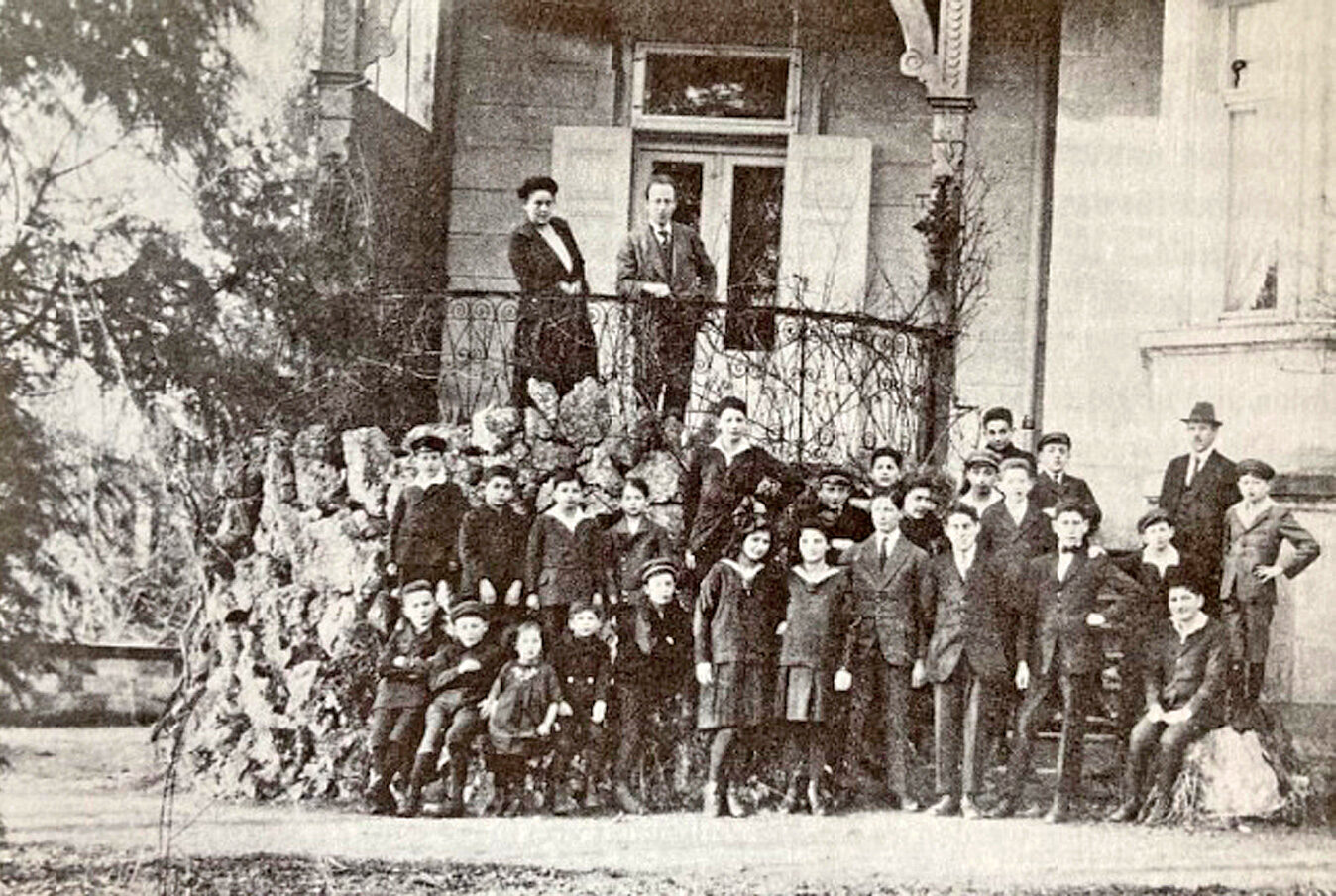
After Hitler’s rise to power, everything changed. In 1934, as Jewish children were increasingly excluded from state schools, Hirsch expanded the boarding house into a full secondary school. The institution served three main purposes beyond its academic goals:
- to protect pupils from antisemitic violence,
- to promote a positive self-image of their own culture and
- to prioritise foreign language lessons as preparation for emigration and life abroad.
In 1936, 60 pupils attended the institution.
The school came to an end during the Kristallnacht pogrom in 1938. Sturmabteilung (SA) members stormed the building, forced the pupils to smash the windows, and arrested Hermann Hirsch along with his entire staff. Shortly afterwards, the Bavarian Ministry of Education ordered the pupils not to return to school. At the same time, Jews were banned from attending state schools altogether. As a result of these events, Hermann Hirsch and his wife emigrated to Palestine in 1939, where he died in 1942.
Next station
From 1873 to 1932, the Nikolaus Chapel served as synagogue. It was the heart of Jewish life until persecution robbed the community of its sacred space.
About the Path of remembrance
The memorial path “Jewish Life in Coburg” commemorates the city’s Jewish community in 14 stations. These stations trace the history from the community’s integration into Coburg’s civic life in the mid-19th century to its annihilation following the early seizure of power by the National Socialists.
Jewish citizens were an integral part of Coburg’s community for decades. Under National Socialism, the Jewish community and its members were eradicated. They had to flee or were murdered. It is our responsibility to keep the memory of their contributions and suffering alive in the town of Coburg.
In 2023 the Coburg town council decided to commemorate Jewish life in Coburg with a memorial path through the town. The memorial path was officially inaugurated on 31 July 2025.