
Sprache | Language | בחירת שפה
The social ascent of the Jews, beginning in the final third of the 19th century, was accompanied by a shift towards a more bourgeois lifestyle. This process unfolded over two generations and involved adopting a middle-class lifestyle, with high educational ideals, aspirations of economic freedom, and participating in political decision-making. It was also a manifestation of the desire to emulate the town‘s leading social classes and, as far as possible, integrate into them. With the introduction of the freedom of establishment in 1863, Jews were allowed to buy villas and houses, and it was primarily through these affluent living conditions that their newly adopted bourgeois lifestyle could be reflected.
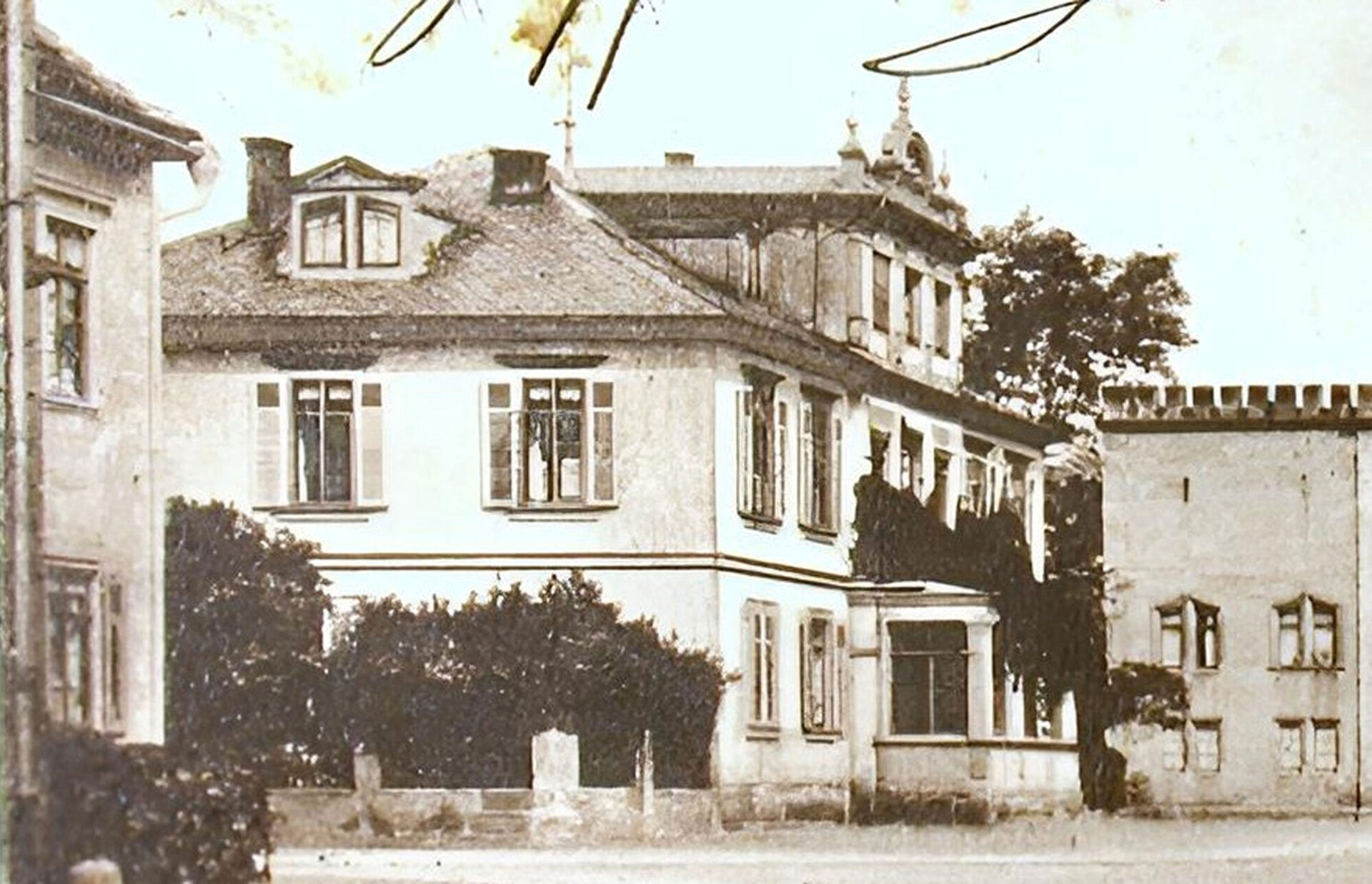
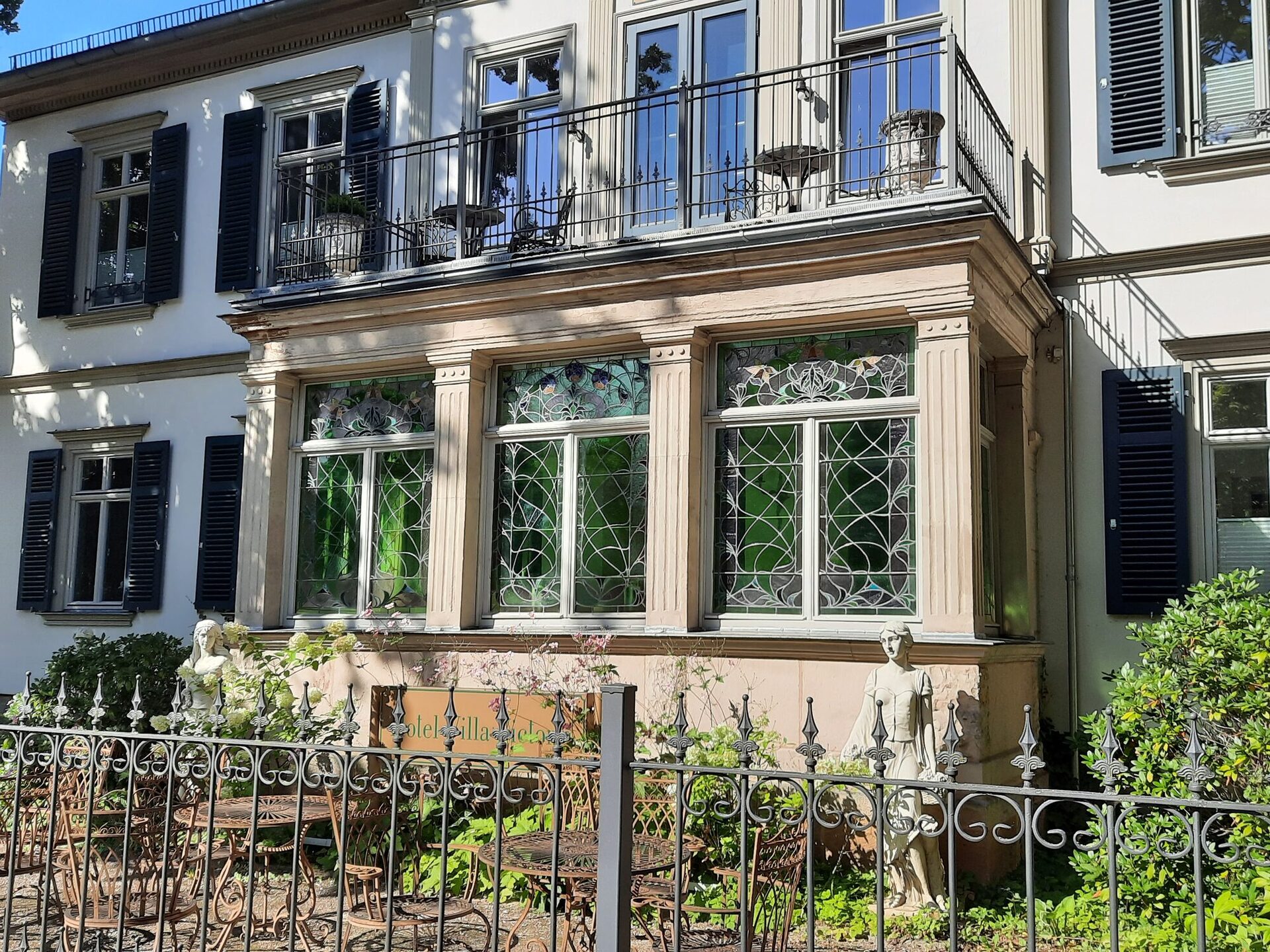
In 1875, for example, the commercial councillor Adolph Simon acquired the villa at Ketschendorfer Straße 2, which had been built in 1835 on the orders of a legation councillor. Abraham Friedmann, the Jewish general manager of the Großmann meat factory, succeeded him as owner in 1919. He lived there with his family of four and had some alterations made to the house, including the addition of a one-story annex with a three-part balcony.
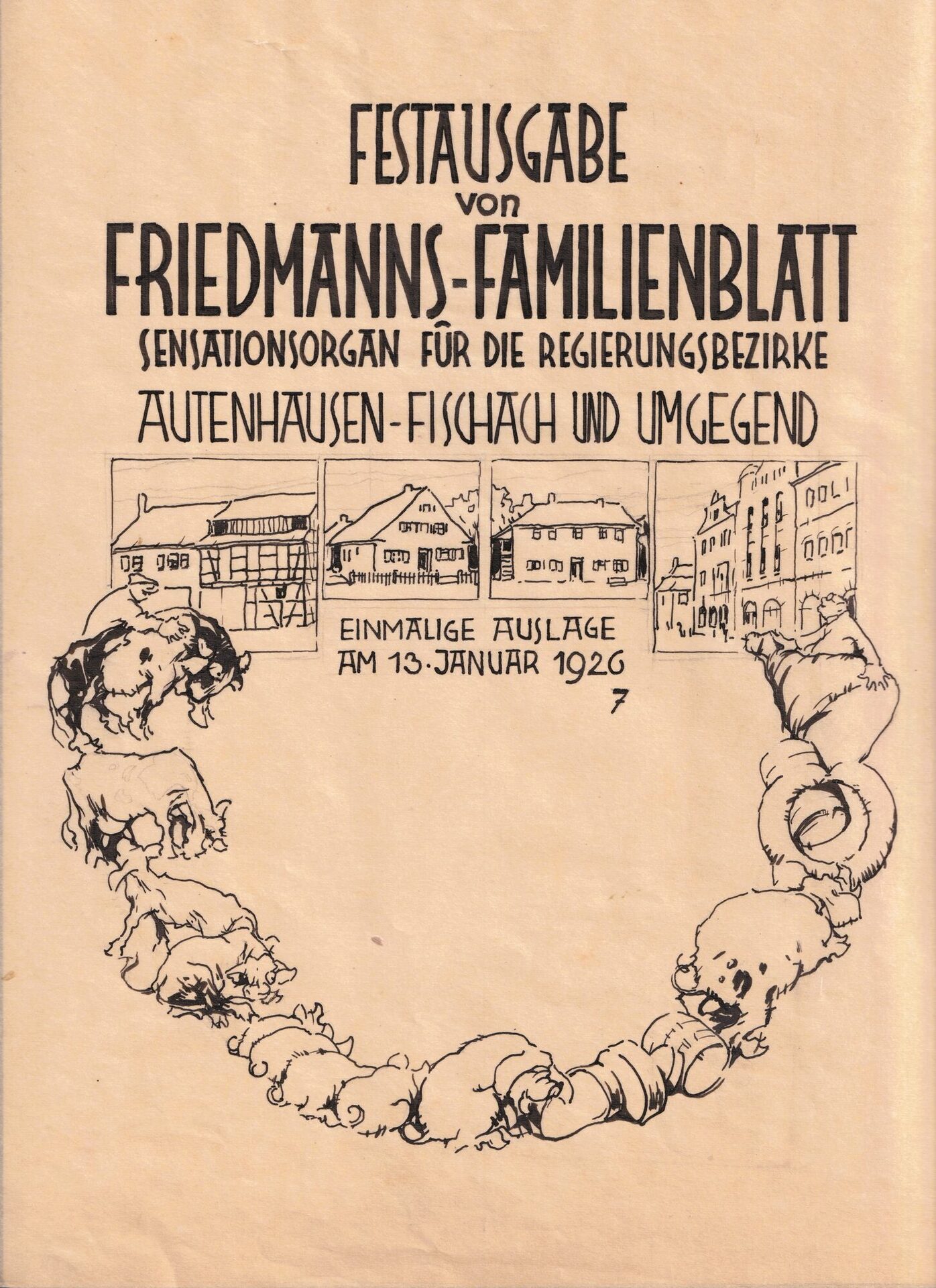
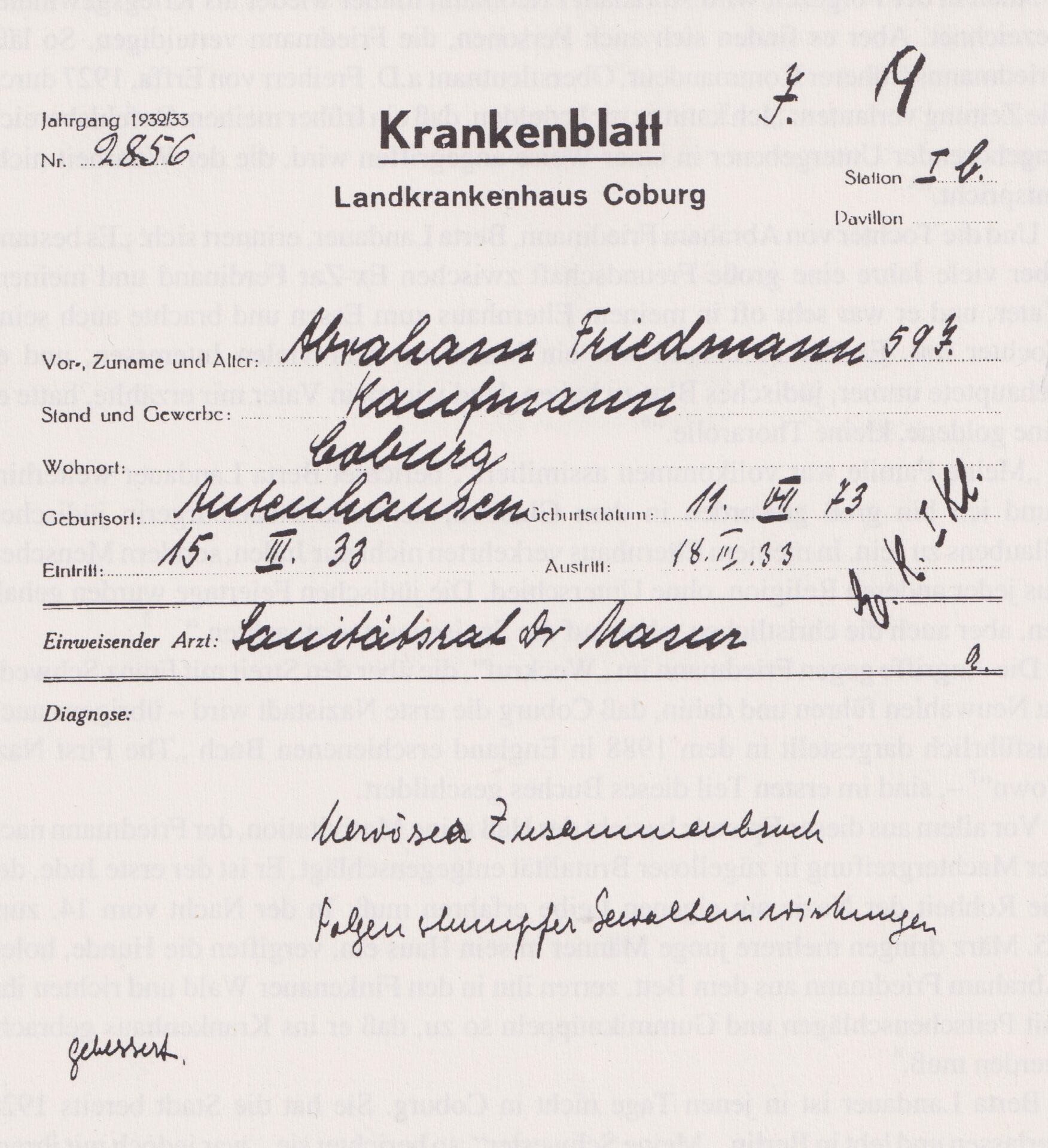
A rumour that Friedmann had funded left-wing counter-demonstrators during the “Third German Day” in Coburg, a major event organised by right-wing forces, made him an enemy of the Nazi Party in 1922. This led to a massive confrontation with Coburg’s Nazi Party leader, Franz Schwede. The conflict escalated in 1929 when, at Friedmann’s instigation, Schwede lost his job at the municipal works. After Hitler came to power, the Nazi Party took its revenge. In March 1933, SA members broke into Friedmann's house, abducted and assaulted him. He fled Coburg shortly afterwards. The Großmann company also dismissed him from his position, leaving him without an income. He was unable to pay off the mortgage on his house, which resulted in the villa being auctioned off in 1935. This process, known as “Aryanization”, also caused all other Jews to lose their property by 1941 if they had not already been forced to sell it. Abraham Friedmann passed away in Paris in 1938.
Next station
Jewish entrepreneurs like the Ehrlich brothers shaped industry with hat and basket goods. In 1938, they were forced out — Sally Ehrlich was later murdered.
About the Path of remembrance
The memorial path “Jewish Life in Coburg” commemorates the city’s Jewish community in 14 stations. These stations trace the history from the community’s integration into Coburg’s civic life in the mid-19th century to its annihilation following the early seizure of power by the National Socialists.
Jewish citizens were an integral part of Coburg’s community for decades. Under National Socialism, the Jewish community and its members were eradicated. They had to flee or were murdered. It is our responsibility to keep the memory of their contributions and suffering alive in the town of Coburg.
In 2023 the Coburg town council decided to commemorate Jewish life in Coburg with a memorial path through the town. The memorial path was officially inaugurated on 31 July 2025.